b
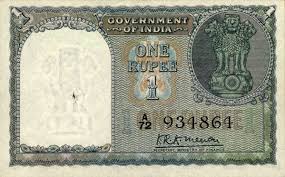
Indian banknotes tell a powerful story of independence, identity, and progress. After independence, the country needed its own currency symbols. The first banknote of independent India was issued in 1949. It was much simpler than today’s colorful, high-security notes. Let’s find out which note it was.
The First Banknote of Independent India
The first banknote of independent India was a ₹1 note. It was issued on November 30, 1949. Unlike today’s currency, it was issued not by the Reserve Bank of India (RBI) but by the Government of India. This is why the note bore the signature of the then Finance Secretary, K.R.K. Menon, instead of the RBI Governor.
Early Design and Currency System
Although the 1949 note incorporated national symbols, its overall design was still quite similar to the British-era currency. At that time, India followed the Anna series, where ₹1 was equal to 16 annas or 64 paise. This was quite different from today’s decimal system of 100 paise. The notes at that time were quite simple and lacked many modern security features.
The Shift to the Mahatma Gandhi Series
Decades later, a major change came in 1996 with the introduction of the Mahatma Gandhi series. A new series of Mahatma Gandhi notes was introduced in 2016. Modern banknotes feature a portrait of Mahatma Gandhi on the front, while the Ashoka Pillar emblem is placed near the watermark window.
Advanced Security Features in Modern Notes
Today’s modern banknotes incorporate several features to combat counterfeiting. These include color-shifting security threads, light and shade watermarks, hidden images, and color-changing ink. These features were completely absent in the first banknotes issued after independence.
Themes, Language, and Cultural Identity
In stark contrast to the design of the 1949 note, modern banknotes reflect India’s achievements. They depict cultural landmarks such as the Red Fort, Sanchi Stupa, and Konark Sun Temple, as well as scientific achievements like the Mangalyaan mission. Additionally, today’s banknotes display the denomination in Hindi and English, along with 15 other Indian languages.
About the Author